 Skip to content







You can spend a small fortune on stereo speakers and still end up with a sound that feels flat, bright or just plain wrong in your room. That is usually not because the speakers are bad. It is because choosing the right pair is less about chasing the biggest brand or highest price tag, and more about understanding how to choose stereo speakers for your space, your amplifier and the way you actually listen.
A good speaker should make you want to keep playing albums long after you meant to stop. That might mean floorstanders in a dedicated listening room, or it might mean a compact pair of standmounts in the lounge. The right answer depends on a few practical decisions, and getting those right is far more useful than getting lost in forum debates.
How to choose stereo speakers for your room
Room size matters more than most people expect. In a small room, large floorstanding speakers can overload the space with bass, making everything sound heavy and blurred. In a bigger open-plan area, tiny bookshelf speakers may struggle to fill the room with scale and authority.
Start with the physical space. If your listening area is a unit living room, study or smaller media room, a quality pair of standmount speakers is often the smarter choice. They can deliver excellent detail, imaging and balance without swamping the room. If you have a larger room with more distance between the speakers and your listening position, floorstanders can bring greater weight, dynamic range and ease.
Placement is part of the decision as well. Some speakers need breathing room from the rear wall to sound their best. Others are designed to work closer to boundaries. If your setup has to sit hard against a wall or inside cabinetry, that limits your options. There is no point buying speakers that need a metre of free space behind them if your lounge room simply will not allow it.
This is one reason showroom demonstrations help. A speaker can sound brilliant in a treated demo room and far less convincing in a tiled living area with glass doors and bare walls. The room is always part of the system.
Choose speakers that suit how you listen
It sounds obvious, but many people shop for speakers as if they are buying lab equipment. You are buying for enjoyment, not for a specification sheet.
If you mostly listen to vinyl, jazz, acoustic, classic rock or singer-songwriter recordings, you may value natural midrange, texture and a speaker that lets voices and instruments breathe. If your playlists lean towards electronic music, modern pop or bigger orchestral works, you might want deeper bass extension and stronger dynamics. Neither is more correct. It is about matching the speaker to the music that actually gets played at home.
Volume matters too. Some speakers come alive at lower listening levels and keep their balance when played quietly. Others are more exciting when given a bit of power and space to open up. If you mostly listen late at night with the volume kept sensible, that should influence the shortlist.
The same goes for presentation. Some listeners love a detailed, forward sound that puts every element under the spotlight. Others prefer something more relaxed and full-bodied for long listening sessions. When customers ask which speaker is best, the honest answer is usually, best for what?
Match the speakers to your amplifier
One of the easiest ways to get disappointing sound is to ignore system matching. Speakers and amplifiers need to work together.
Look at sensitivity first. A more sensitive speaker will generally play louder with less power. If you have a modest integrated amplifier, pairing it with very demanding speakers can leave the system sounding strained or lifeless. On the other hand, an amplifier with solid current delivery can get excellent results from speakers that are harder to drive.
Impedance matters as well, although it is often oversimplified. A speaker rated at 8 ohms is not automatically easy to drive, and a 4 ohm speaker is not automatically a problem. What matters is how the load behaves across the frequency range and whether your amplifier is comfortable controlling it.
If that sounds more technical than you would like, the practical takeaway is simple. Do not buy speakers in isolation. Think about the whole system. A well-matched mid-priced setup will usually outperform a mismatched collection of more expensive components.
Standmount or floorstanding?
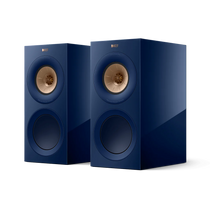
This is where many buyers get stuck. Standmount speakers, sometimes called bookshelf speakers, are often the better value option if you want refined sound quality without taking over the room. A good pair on proper stands can produce impressive stereo imaging and musical detail, especially in smaller to medium spaces.
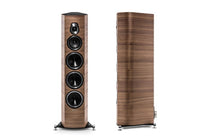
Floorstanders bring obvious benefits. They tend to offer more bass depth, greater scale and a more effortless sound at higher volumes. They can be a strong choice for larger rooms or for listeners who want a fuller presentation without adding a subwoofer.
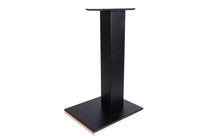
There are trade-offs. Floorstanders take up more visual and physical space, and they are not always the better buy if the room is modest. Standmounts need decent stands and careful placement, so they are not automatically the cheaper path once everything is factored in. The smarter question is not which category is superior, but which one suits your room and listening habits.
Sound quality is not just about bass and treble
When people first compare speakers, they often focus on the obvious things. One pair sounds brighter. Another has more bass. That is a start, but it is not the whole story.
Pay attention to timing, balance and how believable music sounds over time. Can you follow a bass line easily, or does it turn woolly? Do vocals sound natural, or slightly nasal and forced? Does the speaker keep its composure when the music gets busy? A quick demo can make a speaker with boosted bass or sparkling treble seem exciting, but that same character can become tiring after a week at home.
Stereo imaging is worth listening for as well. A good pair of speakers should create a stable soundstage, with instruments placed clearly between the cabinets rather than seeming to come directly from the boxes themselves. You do not need audiophile jargon to notice it. When it is right, music sounds organised and convincing.
Budget for the complete setup
If you are working out how to choose stereo speakers, do not pour the entire budget into the speakers and leave nothing for the rest. The source, amplifier, speaker stands, cables and even basic room setup all affect the result.
That does not mean chasing expensive accessories. It means building a balanced system. A quality pair of speakers driven by an underpowered amp and placed badly will not perform anywhere near their potential. Likewise, if you are upgrading from an older amplifier or turntable, it may be worth considering whether the speakers are the real bottleneck, or just one part of the picture.
For many people, the sweet spot is an affordable complete system that works well together from day one and leaves room to upgrade later. That approach is often more satisfying than buying one flashy component and trying to patch around it.
Audition properly before you decide
Reading reviews is helpful, but your ears matter more. If possible, listen to a few options with music you know well. Bring tracks you have heard hundreds of times. You will notice differences much faster than if you rely on unfamiliar demo music.
Try not to judge a speaker in the first 30 seconds. Initial excitement can be misleading. Spend enough time to hear whether the speaker remains enjoyable, balanced and engaging. If you can compare with electronics similar to what you use at home, even better.
This is where a specialist retailer earns their keep. Honest advice, proper demonstrations and technical knowledge can save you from expensive guesswork. At The HiFi Shop, that often means helping customers compare realistic options, not simply pushing the most expensive pair in the room.
A few common mistakes to avoid
The biggest mistake is buying for specifications rather than real-world use. Another is assuming bigger always means better. It often does not.
It is also easy to underestimate placement. Even excellent speakers can sound poor if they are jammed into corners, placed on flimsy furniture or set too far apart. Finally, do not ignore service and support. Good stereo speakers are a long-term purchase, and it helps to buy from people who can assist with setup advice, matching and ongoing system care if needed.
The right pair of stereo speakers should fit your room, suit your gear and make your favourite music feel more alive. If you keep that goal in mind, the choice usually becomes a lot clearer - and a lot more enjoyable.